Monday, November 4, 2013

Postblogging Technological History: October, 1943: Labour at the Limit: Martha's Burden Is Lightened By Speed

Welcome to Yorkshire!


My Dearest Wing Commander:

Congratulations on your promotion, Reggie! As you will suspect from the arrival of the familiar courier and the heft of the package, this correspondence is a response to the Earl's anxious inquiries. Resuming my practice from the spring of 1939, I provide commentary at the head before financials in the hopes that this will help him understand the choices we have made with the money he dare not own. 

As I look back at the older letters, I marvel at how much has changed in four short years. Then, you were lying low in Vancouver in disgrace. Now you are back in RCAF uniform in dear old Blighty, putting your experience to the benefit of Brittania. Or Canadia? It does not quite seem to roll off the tongue, and I remain in exile amongst the orange groves of Santa Clara County, under standing invitation from Scotland Yard to assist them in inquiries. 

Being that your son now wears his Captain's rings, and can expect his broad pennant in due time (although not, alas, the Vice-Admiralship, thanks in no small part to his just-ended South Pacific 'exile'), it stands to reason that the family that you disgraced so long ago is no longer inclined to press the issue.  Meanwhile, so long as our cousin refuses correspondence with his daughter, I stand suspect of the most lurid imaginable crimes. You will find enclosed, by the way, another package from Chungking with photographs of the grandchildren.  Now that you and he are near-colleagues in war billets, I can even dream of you somehow persuading him to look at them. If not, film footage might be more compelling. It is expected, although unfortunately not soon, for our courier has chosen to reach civilisation via the wilds of Central Asia. What the Red Fort and the NKVD do not know, cannot hurt us.  

Speaking of your son, he arrived on the West Coast at the beginning of the month. One may infer goings-on at Scapa Flow if his services are no longer required in New Caledonia. I will be his host while he pokes about some nooks and crannies for the Admiralty. Amusingly, your boy, who currently rejoices in his after-school status as a Navy dispatch rider, picked him up at the wharf. I was in Seattle at the time, and somehow, someone (and by this I mean Grandfather, who at 103 has not entirely lost his sense of humour) got the idea that a man who had just flown across the Pacific in a PBY might enjoy being harried through the streets of San Francisco like Dundee's bonnet by a seventeen year old on his monstrous American motorcyle. Although, diplomatically, "Captain (E)  J. C." only emphasises that he enjoyed his first opportunity to meet his half-brother.  Had he only been delayed another day, and I could probably have arranged for his wife to do so in something more closely approaching a satisfactory number of wheels, but she was on a train somewhere west of Denver due to bad flying weather in the Rockies. 

Borrowed from Bucksindian.com/Buck's_bikes
Having, at least obliquely, reintroduced our familiar cast from 1939 (yes, it is Fat Chow who is trying to move those documents from Kashgar to Kabul right now), I should close this ramble and get on with . . . Well, my only slightly more on-topic ramble. Forgive me, I am aging, and garrulous.

Tuesday, October 29, 2013

Running Away to the Air, 8: Planes for Ships. A Dialogue

I start with an apology. This is a response to an argument that ChrisM put forward in an email. I'll cite below, but there is a pretty severe power imbalance between a correspondent and a Big Giant Blog Writer. On the other hand, I've got long-mouldering Evidence to put out there. So there's that.

So. You say you want to grow up to be First Sea Lord.


I'm listening. I certainly don't want to be the nay-sayer. It's a colourful title that comes with a peerage, a nice pension, and the prospect of interlocking directorates in profitable publicly-traded corporations. What's not to like? A young naval officer should aim for the title. (Unless he is a doctor, accountant, or instructor. Or an engineer? I'm not sure about the last. Have we decided whether they're supposed to aspire to be Engineer Vice-Admiral, First Sea Lord, or both. Will we change our minds?)

And you did such a splendid job of picking your parents, too! Famous, influential at court, an uncle who is an admiral himself, carefully edited out of your Wikipedia biography to avoid clouding the issues. But there's one small roadblock and one huge. The first roadblock is that you've decided against the gunnery specialisation. You've been at Dartmouth long enough to see the numbers that every young man crunches. Your chances are better in Gunnery. That being said, we all know that it is a small roadblock, because if you are good at a valuable specialisation, you will quite likely advance against a weaker set of competitors. Deciding that you are stronger than, say, your Torpedo rivals is harder, although not so much now that they've been handed electrics.  If you are doing your fellows' homework, as opposed to the reverse, you have as good a chance as any other young man who has an uncle for an admiral. We'll strike that last part if you go for the Torpedo branch.

 Oh? Aviation? Hmm. Well, I can see that. You came of age during the war. You were bred up on the romance of the knights of the air, especially the ones who come in navy blue: BowhillCollishaw, DicksonBell-Davies, Longmore.

But here's the big roadblock. Fancy their fame? Too bad. You see, you were born in 1903. The war to end all wars ended before you were ready to end all wars yourself. Those knights of the air? You will never be one of them. Combat piloting is a young man's game, and there is almost exactly zero chance of a shooting war while you are young enough to fly the fleet planes of your generation. You will lust to get into a Nightjar,

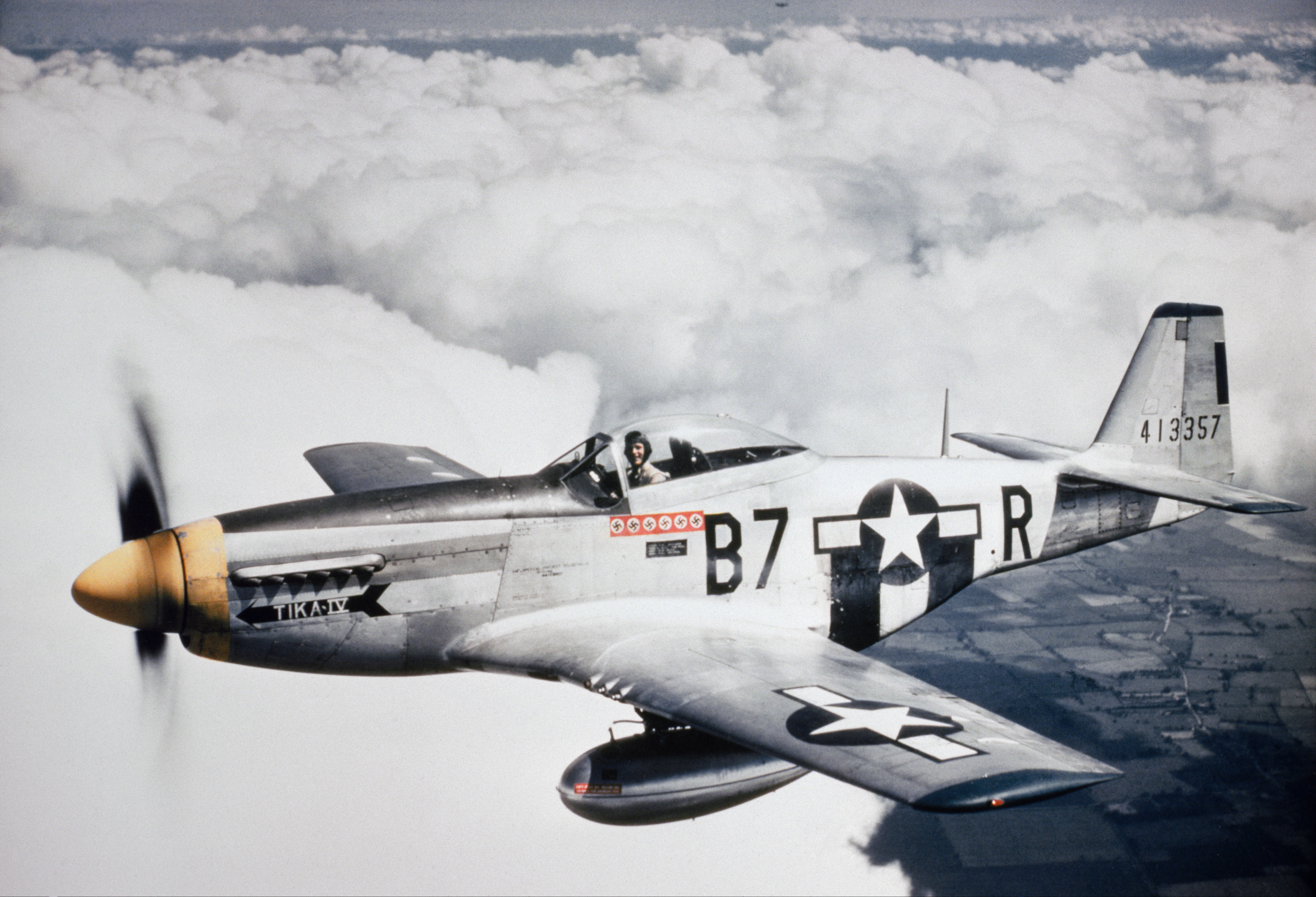
and beat up fields or harbours or flight decks or launch rails, or whatever we end up using, on one of these


You'll be the "old man" of a squadron of these


 and you could lead your young men into battle in it. I do not think that likely, however. There will be another war. This peace is a weeping wound on the international body politic, but the nature of the wound will be to require a long half-healing before we are ready for war again. I will say twenty years, less two months, of course, so that the young men and horses can finish the harvest. As long as I am letting the past be the guide to my predictions, I will guess that the next war will go one year longer than the last, because men are getting madder in these latter days. In September of 1938, you will be 35 and a commander. In September of 1944, you will be a captain, looking for your flag. I hope for your sake that you will win your way through the mean trench fighting of postwar retrenchment to three more promotions, but I do not give you long odds.

So that's my cautionary. I'll leave it to this historian of the next century who has just popped by in his Collingwoodian time machine to give you some more solid retrospective insight.


Tuesday, October 22, 2013

First Parallel: A Technical Appendix: The Thermodynamics of High Altitude Air-to-Air Combat in the Propeller Age


The "funny" way of talking about the science of aeroengines --thermodynamics-- is to say that "you can't win, you can't break even, and you can't get out of the game." That's three laws, and I only propose to talk about one today: the Second Law. It is one of those hard-to-teach rules, and I am going to throw the "ideal heat engine" formulation up and call it a day: Efficiency=1-Temperature(reaction)/T(sink). The efficiency of the best possible heat engine is less than one hundred percent, and it is less than one hundred percent by the ratio of the temperature in the engine with that of the sink into which it is rejected. You think that engines are about power? I tell you that they are about rejecting waste heat. (Or, amateurs study brake effective horsepower. Professionals study calories rejected.)

If I wanted to turn the laws of thermodynamics into cod philosophy (call me, TV! I will!) then I'd call this the diminishing returns rule. Which reminds me.
Photoshop 1939! From Flight Global Archives for 2/2/39, the first official Air Ministry publicity still of the Boulton Paul Defiant. How many guns in the turret? Ha! We're not telling!

Flight, amplifying what the Air Ministry has to say, points out that sometimes official secrecy makes people nervous. "For the past year or two," the paper tells us, people have been writing in to ask what has been happening on the two-man fighter front. The Hawker Demon has been the RAF's frontline two seat fighter since 1930, and is overdue for replacement. Now, at last, the Air Ministry responds. The Defiant, we are told, is a stressed-skin fighter of all-metal, mainly light alloy construction (so much for the patent Boulton Paul construction system) with flush rivets for an exceptionally smooth surface. The feature of main interest is the compact, power-driven turret, armed with a still-undisclosed number of guns. It is presumed that the Defiant's main mode of use will be to fly slightly ahead of, and below enemy bombers, where they are typically ill-protected, as has been demonstrated by later-model "turret" Demons. Given, the paper speculates, equipment with a Merlin I engine, the Defiant will have a top speed of slightly above 300mph, lower than the Hurricane or Spitfire due to the encumbrance of the turret and because of its slightly larger size. Fitted with a Merlin II, it should be as fast as any comparable aircraft in enemy service, while with a Merline RM2SM, giving 1145hp at 16,500 feet when fuelled with 100 octane, it would have an even higher performance. The airscrew is a 3 bladed variable pitch de Havilland, and the exhaust is of the new ejector stub (i.e. turn your exhaust into rocket fuel) type.

But the point, now that I have buried the lede so thoroughly, is this:


It is October, 1943. The Home Front is bracing for defeat in the air, an ignominious retreat to night bombing that will delay the strategic air offensive by months. Meanwhile the United States Army Eighth Air Force is getting ready to win the most extraordinary victory in the history of air warfare. It will, flying from expeditionary air fields in the United Kingdom, win complete air superiority over the home skies of the world's second largest industrial economy before the first tide of summer.

Some people will say that it did not matter, that the only bombing that counts is the kind done in visual range of a foxhole. Some people apparently cannot wait to see the United States Army hump off its entire artillery arm on the USAF (or turn the USAF into the army's artillery replacement). Despite my frustration with them, I cannot say that they deserve to live in America whose only army is light infantry. No-one deserves to live in Breaking Bad America

The P-51 is said to have saved, by itself, the whole of America's industrial strategy. It is the classic example of Joel Mokyr's formulation of technology as a "free lunch," an exogenous input to the economic process, unpredictable and unplanned. One can only lay out a welcome mat on the doorstep, as meritocratic America and miltarist-racial Germany do, and class-ridden Britain does not. I have taken aim at the P-51's status as a magic aeroplane before, and yet its origins were almost entirely serendipitous. North American Aviation had established a relationship with the Air Ministry by selling it the Harvard, so when Sir Henry Self of the British Purchasing Commission approached it about licensing production of the P-40, company president Kindelburger was listened to when he proposed a new fighter, instead. A four gun machine using the Allison engine was proposed. The design was commissioned in March, 1940, and the prototype flew first on 26 October 1941. This is a short development period rather than an unprecedented one, and speaks, as much as anything, to the extent of underemployment in the Los Angeles basin in the spring of 1940. Yet it is also one of the most historically important of all successful rushed technological development programmes.

I have in the past featured the P-51 as a "magic aeroplane," basically as a means of launching into the transformation of the refining industry during World War II. As the cars of 2013 crawl through Vancouver's morning fog this morning, they are carried by the invisible tides of history. But no-one knows about them because they're invisible! Today I shall take another tack, all appropriately autumny, about how we're all trapped in a cellar while the entropic level rises around us ineluctably. 

Second year physics emo is so lame. In ten billion years, we'll all be dead! In your workplace, you might have noticed that a single missed shift has the potential to raise entropy to the eleventy-millionth power. Perhaps you have thought about the war, and imagined a bomb piercing the roof, and either said to yourself, "how could they possibly cope?" Or, alternatively, "How could it have made things worse?"

Or maybe you asked yourself how Erik could possibly have got from the Defiant to the P-51.


Monday, October 14, 2013

From Now On, No More Defeats: First Parallel


I'm mixing my metaphors. The artillerie du place opening up on the fortress from the first parallel is the opposite of the Charge of the Light Brigade. "Half a league, half a league, half a league onward." (Of many images available on the Net, I take this from a History of Surgery and Anaesthesia page.) Let's compromise on themes. Seventy years ago today, two groups (divisions in 1940s USAAF parlance) of B-17s raided the ball bearing plants of Schweinfurt, the swine ford, in Franconia. Fortresses charging.

It's a juxtaposition that works better with cavalry charges, anyway. Forts are (in our imaginations, anyway), the definition of far sighted, deliberate warmaking. Cavalry charges are the epitome of rash decisions. Blow the horn, and you're stuck with what comes next. If it comes home ugly, you are left to live with yourself. Even someone no worse than a cheerleader might get a little shrill as they try to find a way of blaming the other guy for fighting back. Since I am gesturing to Tennyson, here's Elizabeth Barrett-Browning, admittedly not talking about cavalry charges. (No, tell us how you really feel, Elizabeth.)   

I sense a guilty conscience, is what I am trying say, some way that it might be the universe's fault, that you did the best you could, that it had to happen that way. That's how you get 
 Weird, weird, weird, weird. Oh, and thanks to the Drifting Cowboy, by the way. And that's how I get to Schweinfurt: guilty consciences and thin rationalisations.

By the way, can I just say how awesome is is when there are still things on open shelves for browsing, such as the entire run of The Economist? Pull down a volume, and you can find out how, on 14th October, 1943, Seventy years ago today, 29 B-24s of 2nd Bomber Division, 8th Air Force, and 291 B-17s of 1st and 3rd Bomber Division set out from their British bases, to conduct a "Flying Fortress raid" on the important ball and roller-bearing plants of Kugel Fischer AG and Vereinigte Kugellagerfabriken AG, the large German subsidiary of the Swedish SKF. Photos show that at least half the facilities were destroyed, and Brigadier General Anderson of the USAAF suggests that the plants had been knocked out of production, and that a  restoration of 25% of production is the most that one could hope for in the immediate future. The Economist is not so sanguine. Ball bearings are a pretty quotidian product, and SKF's subsidiaries serve pretty much every national industry. Germany can import from Switzerland and France, as well as from Sweden.(The point of British attempts to tamper with the Swedish ball bearing industry are to keep the most valuable and difficult-to-manufacture types out of German hands.) The Economist does not know the numbers, but there are 524 American heavy bombers serviceable on the fields of Britain this day. It will later be established that there are 964 German single-engined fighters on charge within the borders of the Reich this day, although Richard G. Davis does not make it clear whether these are all serviceable, and I cannot check his source right now. (Hinsley, British Intelligence, III, 1, 296.)

A little further on in the same number of the legendary weekly newspaper for the economically-minded, editorial asks the question we long to hear answered in this October, when flame-red things flutter from the sky. "How is it that journey’s end may not yet be in sight even though most of the mileposts have been passed? Will the war be over in three months, in six, in twelve?" Do we not have threefold air superiority? Are we not bombing relentlessly? 
  

Monday, October 7, 2013

Postblogging 1939, Final Technical Appendix: The Problem of Control


It turns out that we did not, in fact, have a base on the dark side of the Moon by 9/9/1999. Even the idea seems a little crazy in 2013. But this is then, and Space 1999 was 1974, and people had a somewhat different idea about the likely rate of technological progress in 1974 than they do today. (Just to be upfront about that, I think that this perception is real, and has been explained by Ester Boserup, and would therefore like to nail my colours to the mast: the rate of technological innovation is slowing down.)

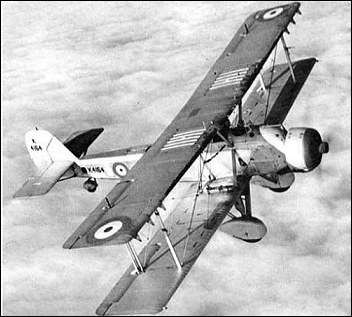
But opinions only go so far. How about a photoessay? It is 3 September 1939. This plane


was replaced by this plane,


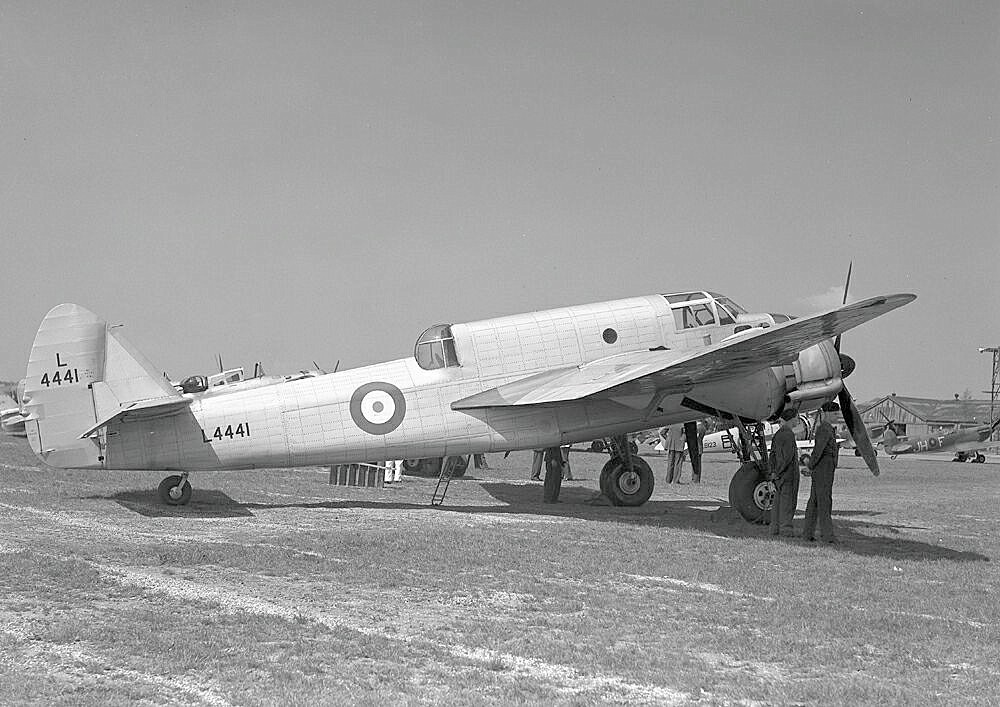
which is still in frontline service.

It is supposed to be replaced by this plane, although in fact it will soldier on until 1942.


And the Beaufort will be replaced by 


In 1946. (Technically, the Brigand will replace a torpedo variant of the Beaufighter, the Beaufort having long since disappeared.)


The Hawker Horsley was the last all-wood plane designed by Sopwith-become-Hawker, entering service in 1926. The Brigand was a hasty development from 1942, and arguably the last prop-driven RAF strike aircraft to be developed. (We would be having the argument over the Shackleton, I think. Or maybe the Wyvern?) I've italicised the Brigand's vital stats. 


Crew: two, pilot and bombardier/gunner; 3
Length: 38 ft 10 in (11.83 m); 46 ft 5 in (14.2 m)
Wingspan: 56 ft 5¾ in (17.22 m); 72 ft 4 in (22.1 m)
Height: 13 ft 8 in (4.16 m); 16 ft 4 in (5 m)
Wing area: 693 ft² (64.38 m²); 718 ft² (66.7 m²)
Empty weight: 4,760 lb (2,164 kg); 27,500 lb (12,470 kg)
Loaded weight: 7,800 lb (3,545 kg); 38,200 lb (17,320 kg)
Powerplant: 1 × Rolls-Royce Condor III V-12, 650 hp (485 kW); 2 × Bristol Centaurus 57 radial piston engine, 2,165 hp (1,620 kW) each

Performance
Maximum speed: 125 mph at 6,000 ft (201 km/h at 1,829 m); 358 mph (576 km/h) at 13,700 ft (4,180 m)
Service ceiling: 14,000 ft (4,267 m); 26,000 ft (7,920 m)

Climb to 10,000 ft (3,045 m) : 14 minutes 20 seconds; 1,500 ft/min (460 m/min)


Armament

1 × forward-firing .303 Vickers;  4 x 20 mm Hispano Mk V cannon
1 × rear-mounted .303 Lewis; None.
1,500 lb (680 kg) bombload or 1 × [18"] torpedo; 1 22 in (559 mm) torpedo or 2,000 lb (907 kg) 

That is 20 years from deployment to deployment, but, put it another way, only 10 from the retirement of the Horsley to the specification for the Brigand. 

The bullet point summary could be that technological change, as measured by new generations of military aircraft, was a lot faster in the 1930 and 1940s than it is today.  But I do not think that this summary point is a very helpful one. I certainly would not advance it as an illustration of my Boserupian claim that technological development is a function of population increase, because I have not established that the jump from (say) the F-15 to the F-35 is comparable to that from the Horsley to the Brigand. More likely, it illustrates the harvesting of low-hanging fruit.

I'm reaching for something deeper. 


Monday, September 30, 2013

Old Europe: The Young Ones

And now for a short photoessay about life today.

1.


Atmosphere is next to Fuel. It is around the corner from Tractor, which isn't far from Wind. Atmosphere used to be called Coast Mountain, when it wasn't far from the Mountain Equipment Co-op, which was where hippies bought their camping gear, when there were hippies. It is a good place to buy kayaks, which you need if you want to go kayaking.

2.


Anyone want to take on a 28 hour full time  minimum wage job? Anyone? Yes, we know that you can't pay rent in this neighbourhood at that wage, but that's the going rate. It's not like we can afford to pay more. Anyone? I am going to go out on a limb and suggest that people who take these jobs will have to give up on their kayaking-related activities, and perhaps shop at stores that do not have one-word noun names. 


In 269 or in 271, or perhaps in both years, since surviving fragments of Publius Herennius Dexippus clearly identify a "return" to Italy, the Emperor Aurelian encountered the army of a German nation called the "Juthungi," and allies who may or may not have included Swabians, Marcomanni, Alamanni, Vandals and/or Goths, on the loose in northern Italy. Either in both years or in only one, he chased them around the Pianura Padana (I'm opting for the Italian to shake readers out of using "Po Valley" to label a more complex geography, and specifically to highlight the northeastern extension into Friuli that is also typical river valley terrain but which has no association with the Po). Perhaps on the first occasion he overawed the Juthungi with a spectacular embassy, or, perhaps it was in the second invasion, after he defeated them in three battles, chasing them as far as a crossing of the Danube, or of the Po. It could be either. In any case, he conscripted 40,000 cavalry and 80,000 infantry from the Juthungi, whom he then took east to defeat Zenobia. Or, possibly, which he assembled at Aquiliea in anticipation of the Persian war he never fought. It depends on timing. 

It is the same confused story when Galerius, son of legendary Valerian, pursued and defeated "Alamanni" barbarians near Milan. The story of this incursion is continued in a Roman inscription recovered at Augsburg in 1992, which tells us that Marcus Simplicinius Genialis defeated these same "Juthungi" on the north slope of the Alps in April of 261. Probably. Argument continues about whether this happened before, after, or at the same time that Valerian, his army, and his court were captured by the Persians.

Okay. Wait a minute. Dates have meaning. War in April? Now, that link is not going to mean very much to you if you haven't seen Little Big Man. If you have, you know what comes next. Sheridan's Winter Campaign was a more traditional winter campaign than the one that it is implied here, fought in December on the last standing forage. An army that takes the field in late winter or early spring does so out of magazines, usually aiming to besiege and take a particularly exposed or ill-defended place. Only the most powerful and overbearing state can take the field when there is no grass, and even then  it is a reckless thing to do unless a quick end is guaranteed. Suddenly the Juthungi appear to us in a more desperate light, as victims rather than as perpetrators, however the Roman historians wish to spin this.

"Juthungi" has a number of suggested etymologies. As should by now be clear, I am going with the argument that the word references a "youth sodality." Or, to put it more bluntly, it means "The Young Ones." By which I do not mean these guys.

I mean this.


Little Joe the wrangler he'll wrangle never more
His days with the remuda they're all done
It was long about last April he rode into our camp
Just a little Texas stray and all alone


....
Said he'd try to do the best he could if we'd only give him work
Though he didn't know straight up about a cow
So the boss he cut him out a mount and kinda put him on
And we knew he liked our little stray somehow
Well he taught him how to heard the horses and learned to know 'em all
And to get 'em in by daylight if he could
And to follow the chuck wagon and to always hitch the team
And to help the carsonaro rustle wood

We had driven to Red River and the weather it was fine
We were camped down on the south side of the bend
When a Norther started blowin' we called the extra guard
Cause it took all hands to hold the cattle in
Now little Joe the wrangler was called out like the rest

Between the streaks of lightnin' we could see a horse ahead
It was little Joe the wrangler in the lead
He was riding old Blue Rocket with a slicker o'er his head
And he's trying to check the leaders in their speed.
We finally got'em millin' and they sort of quieted down
The extra guard back to the camp did go
But one of them was missing and we all knew at a glance
Twas our little Texas strayboy wrangler Joe
.

"Cowboy historian" Don Edwards manages to make a long song even more prolix, and the bowdlerisation of  Hispanicisisms in the Marty Robbins version is suggestive of subtexts in a song that is, ultimately, the same old story of a desperate kid dying in an industrial accident while trying to do the best he could in a job that he knew he was very lucky to get. 


Monday, September 23, 2013

Postblogging 1939, August, II: Technical Appendix and Wrap-up

Théodore Géricault has one little thing to say about  navies neglecting navigation. Also, about how cannibalism is sexy. (Look, it's not my kink, but I think we've come to the point where we need to acknowledge that, short of taking certain  nonsense at face value, we need to acknowledge that 'vores drive this stuff.)


And now for some  porn I can get behind:


The Antarctic Peninsula, as it may or may not have been walked by one John Davis, the New England sealing captain who may or may not have commanded the first ship to make landfall, in the same year that two separate expeditions discovered the peninsula from the sea. We don't know for sure, but given the number of sealers making first landfall in the rookeries of the south in this year of grace 1820, we'll give him all credit due. Twenty-three year old captains commanding ships full of teenagers, discovering the most desperately dangerous lands on Earth to meet the demand for train oil. Or, more accurately, to make a living and earn the money to have a life in these desperate days after the withdrawal of public finance at the end of the Napoleonic wars. As a meditation piece for today's post: "Little Joe the wrangler will wrangle never more."

Okay, enough of the maudlin. As it turns out, Gericault's has more to do with an age when young men's hopes are being dashed against postwar austerity than the wreck of the Meduse frigate directly. It turns out that the wreck of the Meduse, is somehow Louis XVIII's fault, mainly, I think because "the Generation of 1820" is growing up into an unexpectedly opportunity-deprived adulthood due to post-Napoleonic austerity. The conjunction I see between the wreck of the Meduse frigate and Antarctic exploration is that  incredibly green crews are sailing  inconceivably remote and inaccessible places while still having shipwrecks is that navigation is actually very hard. Our attention is being drawn to a particular shipwreck because the young men of France are pissed that they don't have jobs. Historians of technology are not necessarily called upon to revise our understanding of particular historical episodes. I have no idea whether there is even a revision to be made in the history of the Meduse. Perhaps its captain and navigator really were as incompetent as the anti-Bourbon press presents them as being. 

This is a thing about the history of technology. Not only is it hard to do properly, we have a motive for doing it wrong. In talking about patent trolls, I've had occasion to mention Elihu Yale, whose patent "Yale lock" has a prototype discovered in ruins from the Uruk expansion, and Henry Sibley, who got a patent for inventing the wigwam. It may be because I've had too much coffee, but I find it hard not to look at the smug, Civil War-era smile on the face of the Wikipedia photograph and not want to climb through a convenient time portal and punch him. Except that the real villains of this story lie hidden at the Patent and War Offices, and the real victims are only the US taxpayers. The residue of old-time historians of technology who count American Nineteenth Century patents to conclude that American society was especially innovative? They just need to be corrected. Because here is a place where the historiography needs to be pushed forward to serve policy and the larger project of historical research. Technological progress does not  happen of itself, nor does it fail to happen anywhere near as often as we suppose.

Now try this as a Google Search Item:

"The RAF had neglected. . . "