Saturday, April 18, 2020

Postblogging Technology, January, 1950: Straight out of Quarantine


R_. C_.,
Shaughnessy,
Vancouver, Canada


Dear Father:

I bet you were wondering who this letter would come from this month, what with Uncle George saying "no," Auntie Grace and James in Singapore, Ronnie in quarantine because of Susan's diptheria, and me waiting on orders.

Well, it's me. I was hoping that this would be coming to you from Tampa, and I could tell you about what it's like flying straight into a  Florida rain squall with the most giant radar the combined Navy and Air Force could dig up blasting into the thick of it to see what comes back. But, I'm not. I'm in the backwoods of Formosa, "advising" the Koumintang Air Force on the delicate subject of Stop Doing What You're Doing And Do Something Else Instead. I can't say very much about that, apart from the obvious, which is that the Communists are using Russian equipment, and don't seem to be doing it well, so maybe we'll go some way towards cracking their communications, which will be helpful for finding the B-29skis before they blow up Seattle (which would be bad, and we're against it even though it'll help Wichita pick up some contracts, which would make the President happy).

On the "bright" side, this is the back end of God's creation, and all of Ronnie's mail is being burned, because the Post Office doesn't know how to fumigate diptheria germs and quarantine is quarantine.   So all I've got for this project is the post's subscription to Aviation Week, Time, and (for some reason) The Engineer.  Or, well, I would, but some horse's rear end cleared out all this issues since 1930 and diverted the new subscription to an office in Taipei three months ago, and so much for that. (The post still gets to pay for them, though, so not all is lost! Or, no, wait, that means even more is lost.) 

Onward and ever upwards!

Your Loving Son,
Reggie


Thursday, April 9, 2020

The Bishop's Sea: The Hawk of the Atlantic

A bit of an exercise in dilettantism here, but worth it because this stuff does seem to be neglected in the historiography of the "Reconnaissance."


Some 4000 meters above sea level in the High Atlas are the springs of the Oued Sous, which falls into the Atlantic near Agadir after only a 112 mile run. The Sous is well known as the home of the Argan tree, something of a sensation in the cutthroat world of hair products for the last few years. 

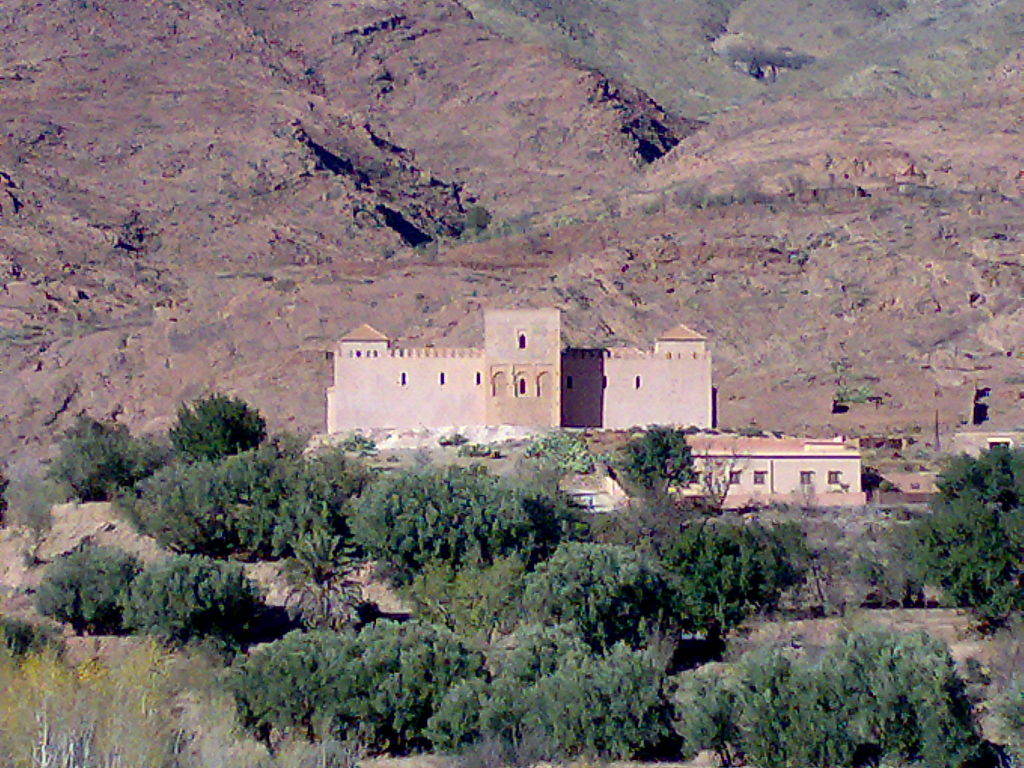
Timmel mosque at the ribat of Timmel in the Nfis valley.
It was in this fertile and well-irrigated region, in the otherwise unidentified village of Igiliz, a bit more than 500km south of Casablanca, that, perhaps in 1080, Abu Abd Allah Muhammad ibn Tumart was born, in the nation of the Hargha, part of the Masmuda Confederation. His given name is something of a mystery, for he is known to history as the "Son of Delight," perhaps from his father's nickname, although  numerous Sufi saints of Morocco bear the same name.

Perhaps unlike them, Ibn Tumart climbed towards the wisdom of God, like a goat  after an argan nut, travelling first to Cordoba in al-Andalus, and later to Baghdad, in search of Islamic learning. Which he found, it is said, at the feet of al-Ghazali. (The hagiographers really aren't that helpful.)
This map, which I scraped from an online thesis on colonial
Morocco, does a good job of capturing the scale.


Be that as it may, Ibn Tumart returned to the Maghreb by ship from Alexandria in 117/18. At Igiliz, at the end of Ramadan in 1121, he preached a fiery sermon in which he pursued weighty theological issues as well as the gravely immoral Almorad practice of veiling men and unveiling women, something with reverberations for our modern, masking times. Properly wound up, he proclaimed himself the right-guided one, the Mahdi, which implied levying revolt against the Almoravid regime. Promptly decamping to the high fortress of Timmel, in the midst of the Masmuda country. His cause united six nations of the Masmuda, closing the passes from Marrakesh into the Sous anticline. 

The anticline between the High Atlas and Anti-Atlas contains not only the watersheds of the Sous, but of the Draa valley, which rises only a little to the east of the Sous, but runs at first east and then south to reach the Atlantic below Tagounite, falling into the Atlantic north of Tan-Tan, marking the former border between Morocco and the Spanish Sahara in its lower course.  At its westward bend, far inland, lies the tell identified as old Sijilmasa, and, near it, the spectacular hillfort of Jebel Mudawwar now a regular movie location.

At this time, Sijilmasa was the major northwestern terminus of the caravan trail from Ghana, and also a way station on the east-west route to southern Morocco from Tunis via Tlemcen. Although drawing itself apart from Almoravid power, it was a crucial waypoint on the trans-Saharan route to the Empire of Ghana and its gold, and the blockade was an existential threat to the Almoravids, although before the economic effects could be felt, ibn Tumart had led his tribesmen down to besiege Marrakesh and been ignominiously killed. It therefore fell to
By Walrasiad - Own work, based on Morocco relief location map
.jpg, CC BY-SA 3.0,
https://commons.wikimedia.org/w/index.php?curid=34733373
an Algerian named Abd al Mu-min to become the actual first Almohad caliph after extinguishing the Almoravid regime under its last leader, Reverter, Count of Barcelona, father of  Berenguer of Barcelona and of Abu-l-Hasan Ali ibn Ruburtayr. Abd al Mu-min would ultimately rule from the Guadalquivir to Cyrenaica, but he died while building a city at Agadir and an arsenal at Rabat, and so did not live to see his seapower roll back Christian conquests in the Atlantic. 

Which is my point. The timing and context of the founding of Agadir, a Moroccan porty city that lies far to the south of anywhere I would had imagined.

If you were wondering. Well, that, and I had the Almohads confused with the Almoravids.

Monday, March 30, 2020

An Economic-Technological Appendix to Postblogging, Winter 1947: Shutdown

UBC Library is currently closed, 'cuz there's nothing that says social mingling and contagion like old books. The decision will be "revisited" on 8 April, and although I expect I know what the decision is going to be, I will wait before I take steps that I'll regret, such as subscribing to Aviation Week to get access to their online archives. 

That's if the apocalypse hasn't got me by then. Since a considerable number of my customers seem determined to keep on paying for bananas, the Sing Tao, and other random old person goods with small change hauled out of the crevasses of their outer wear (and probably can't pay any other way), that does remain a worrying possibility. At least, to this point, I don't have to worry about the other apocalypse, when people can't make rent in April, leaving the poor, honest rentier no alternative but to evict, foreclose, liquidate, and otherwise shut down our entire civilisation. You know. Just like what happened in China. 
Speaking of historical analogies, this is a historical blog, and I perhaps didn't give the total shutdown of the British economy in the winter of 1947 as much time as it deserves. That's especially true considering that it has largely gone down the memory hole. (Just like poor Edmundo Ros, then reigning supreme on the BBC's Third Programme.)


So the winter of 1947 was when the  British economy shut down (well, the "non-essential bits") to save coal. Depending on the particular business, the shutdown lasted for most of the month of February and into March. BBC television, for example, was off the air from 10 February 1947 to 11 March, while The Economist missed its 22 February and 1 March issues in perhaps the gravest blow to press freedom and English values since ever. (Says The Economist, which managed to get its point across in an insert in the Financial Times.
(Look! It's the economy not going!)

Thursday, March 26, 2020

An Epidemiological-Technological Appendix to Postblogging Technology, 1943--49: The Iron Lung

I'm not a medical kind of guy, so I've mostly stayed away from the human sciences side of things in these technological appendices. Although I do see, looking back, that I promised a Technnological Appendix on iron lungs at some point. When I did so, I had 2022 more in mind, but the pandemics of 2022 will have to take care of themselves.

Also, the doctors can't be entirely immune, if only because we've met so many awful, awful surgeons in the pages of the old Medicine sections. I'm going to have to hit the right balance between body horror and humour, but the various maniacs experimenting on maniacs deserve some notoriety. Especially when the guy who was treating polio by jackhammering kids wound up as a President of the Los Angeles AMA in later years. Again, though, it looks like I can wait and do a long, long checklist of doctors doing brain surgery on mental patients just because they can. (Or bisecting King George to relieve his stutter or possibly cold sweats, as they actually did.)

So. Iron lungs. Yes, they are a very technological solution to a very real epidemic. But there's more to it than that. I'm old enough to remember the detritus of the popular culture of the 1950s,. Joke books were a thing, and beside the still-acceptable "Polack jokes" and "dumb blonde jokes," there was a genre of "sick jokes" that included  "iron lungs." For a child of as early as 1964, the iron lung had become a mysterious phenomena of a forgotten age. The jokes, not so much.

 Hard as it is to imagine, even believe, in this modern age of the triumph of science, between 1952 polio had gone from a seasonal terror to a historical artefact. An age in which children still died of disease had ended, overnight. At which point it seems as though we decided that we could do without children, and thus this modern age of pandemics that kill the elderly.

Thursday, March 19, 2020

A Technological Appendix to Postblogging Technology, December 1949,II: Fun with Uranium


As we've been hearing, during a 1 November 1949 television interview about, ironically enough, the need for more atomic secrecy, Senator Edwin Johnson's 1 told the world that America was developing a "super bomb," a thousand times more powerful than an atom bomb. It's evidently not as big a deal as that time the junior Senator from Colorado called Ingrid Bergman a floozy on the floor of the Senate, but apparently he's the guy who set the world on the path to the hydrogen bomb. Although considering that he is also known for a statement that is very hard to interpret as anything other than a threat of pre-emptive atomic war, it's not a hundred percent clear to me that the Russians would have eschewed the pursuit of  megaton-range weapons even in the absence of IVY MIKE. 

There's also Robert Barker's Aspatron to consider. (I notice that I have him as "Parker" in my precis. I'd have to (shudder) reread the Engineering article to be sure whether the error is mine or the editor's although past experience suggests that it was me. The point is that the Popular Science blurb is much more lively and lucid than the  turgid Engineering piece, so I'm going with that one.)

The story of the Aspatron occasions the question: What, exactly, were people making of Johnson's comments between November and the official announcement of the H-bomb programme on 31 January?

Sunday, March 15, 2020

Postblogging Technology,December 1949, II: Blue Christmas


(Swapped for "Blue Christmas" below, because I have a legit excuse to lead off with Lead Belly.)

R_. C_.,
Shaughnessy, Vancouver,
Canada.

Dear Father:

Once again I find myself writing a Christmas letter that, given the terror of First Year Law final exams, I'm more likely to be handing to you at the door as I stumble through!

Be gentle, and say nothing about my hair. NOTHING.

. . . Or so I said at the head in the long-ago time before Contracts final. (It's okay. I did fine, down in the mush middle of the "As," a little short of the high flyers, but good enough to probably make moot court.) 

Ahem. Allow me to dig myself out of multiple digressions and back to where I am. I started writing this letter way back on the 16th, pending the arrival of my subscriptions. And Contracts, next day. I was feeling a little self-conscious about my hair, but all ended well when Uncle George paid for an appointment on the 20th. I know I say that I don't like to take family charity, but I make an exception for new cars and my hair. 

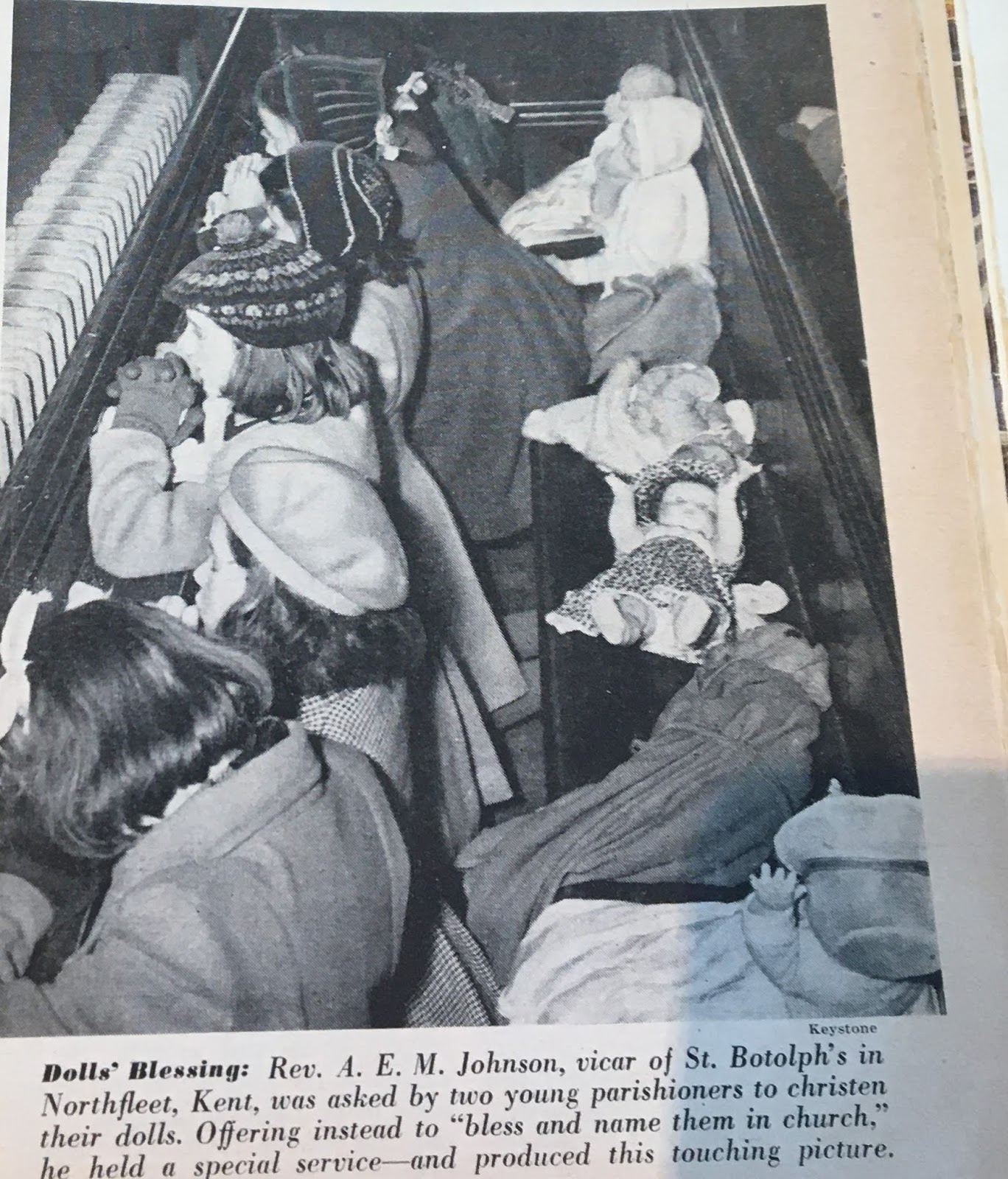
St. Botolph. Fascinating. No word on central heating.
To continue this convoluted chronology that only some learned medieval  monk could unravel, I am writing this now, and bringing you up to date, on the train on the 23rd. Allowing that I pull into Pacific Station on time, you will have it in your hands by 7. HOWEVER, one of my magazines is bringing out an issue on the 30th. 

It is, of course, Engineering, which exists solely to crush my soul. I am PROPOSING to give it whatever brief due it is worth on my return to campus. I will send that, as an addendum, to you, by the start of classes. You will be charged with assembling the whole, reading it, if you are so inclined, and then forwarding it to the Earl. 

And now that I've explained all of that, Reggie's in the Pullman, so Merry New Year,  Jolly Epiphany, or whatever's right by the time you read this. 

Yours Sincerely,
Ronnie

(And that's how you deal with a contagious case of mumps)

Saturday, March 7, 2020

Postblogging Technology, December 1949, I: Down Canberra Way


R_. C_.,
Shaughnessy,
Vancouver,
Canada

Dear Father:


I am glad that this finds  you home in the heights above Quilchena Park, for you are venerable and past the day when you must be forged in the furnaces of academe into a LAWYER. 


Ahem. Sorry, that was a bit of a reach, but the Christmas issue of Fortune is a bit slight, to make room for the giant gift catalogue in the middle, but there's lots of nice Hudson Valley-related paintings reproduced in the middle under the title, "Painters of Industry," and the one of workers pulling a cannon out of a furnace is credibly "technological." 

Also, I am being FORGED right now by Contracts review. I think I am getting this! Your son continues to prepare to Occupy Taiwan, although he also has a very hush-hush job testing something he describes as "the cancer of the skies," which might have something to do with beating radar?

Mrs. C. sends her thanks for your kind gift.

Yours Sincerely,
Ronnie